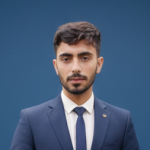
Bogdan Paul DORCA
About Candidate
Location
Education
GPA 4.0/4.0
Thesis Topic: A Hybrid Conceptual Design Methodology for Supersonic Aircraft using Morphing Technology
GPA 4.0/4.0
Relevant Coursework: Numerical Linear Algebra, CSE Algorithms, Computational Data Analysis, Modeling and Simulation
GPA 4.0/4.0
Relevant Coursework: Advanced Design Methods, Advanced Aerodynamics, Mathematical Methods of Physics
Main Profile: Flight Performance and Propulsion
• Thesis Topic: Three-dimensional Mixed-Mode Crack Propagation Calculations based on a Submodel Technique
• Relevant Coursework: Aero Engine Technology, Computational Fluid Dynamics, Multidisciplinary Design Optimization
Degree completed CUM LAUDE (with distinction)
• Thesis Topic: Design of a Sustainable Surveillance UAV Led by a Turbopropeller
• Minor: Airport of the Future (Airport Planning, Design and Operation)
• Relevant Coursework: Flight and Orbital Mechanics, Aerospace Systems and Control Theory, Structural Analysis and Design
Work & Experience
Conducted research on developing a collaborative MBSA&E framework with improved mission analysis for NASA:
• Developed multidisciplinary components in OpenMDAO to address limitations in traditional aircraft design
workflows, enabling more integrated mission and performance analysis.
• Tested new framework for various vehicles, including the Airbus A320neo and a novel Strut Braced Wing
(SBW) concept with a single rotating open rotor (SROR).
• Collaborated with NASA engineers to verify and validate aircraft models and results.
• Showed that including aeropropulsive interactions for the SBW SROR, as opposed to handling aerodynamics
and propulsion separately, can increase fuel burn by up to 14%.
• Conducted research involving the FAA's aircraft mission performance tool AEDT (Aviation Environmental Design Tool):
• Designed, verified and validated touch and go and circuit profiles inside AEDT for over 150 existing aircraft.
• Created software tools capable of replicating aircraft performance parameters (e.g. thrust, fuel burn).
• Tested and offered recommendations to the FAA regarding various features/issues within AEDT.
• Served as mentor for groups of 6 undergraduate students for AE2610 (Introduction to Experimental Methods in AE).
• Responsible for arranging and supervising laboratories, grading technical reports and giving feedback to undergraduate
students.
Master Thesis project performed at the Numerical Methods in Structural Mechanics, Heat Transfer and Air Systems team.
• Reduced number of test cases in which MTU Aero Engines’ crack propagation calculation tool fails to predict correct crack
propagation parameters by implementing a submodel method consisting of a pure tetrahedral global model followed by a
hexahedral submodel calculation.
• Performed mixed-mode crack propagation calculations for simple examples as well as for real engine components (e.g.
blades, vanes) using both the new submodel approach and the old combined hexahedral-tetrahedral model approach.
• Demonstrated that using the submodel method instead of the previous approach can reduce the total number of cycles
until fracture by up to 7% for various components.
Internship performed at the Rotor and Structures team, part of the GAS Product Line, GT Engineering Competence Center.
• Designed a retractable drawer that allows for closed-engine CVC- rotor horizontal alignment for the GT13E2 and made 3D
CATIA models. This allows for major time, manpower and cost savings since activities such as the rotor removal would not
be needed anymore.
• Built a Python tool capable of automatically creating personalized GE cover pages for 2000+ documents from the Project
Management department of the Marafiq project, a process which was previously done manually. The tool is now also being used by other departments of the Marafiq project due to its processing speed and reliability.
• Responsible for installing and configuring computers, ensuring their operation and maintenance, data security and
equipment, assisting users, maintaining equipment records and data storage devices
Skills
MATLAB
CATIA
Python
C++
Multidisciplinary Analysis and Design Optimization (MDAO),
GIT
JMP
Model-Based Systems Engineering (MBSE),
Fortran
Tableau (Data Visualization)
Finite Element Analysis (FEA)
Aerodynamic and Propulsion Analysis
Abaqus FEA
ANSYS CFX
MagicDraw (SysML/UML Modeling)
TensorFlow
FLOPS,
Awards
Bachelor of Science in Aerospace Engineering Degree completed CUM LAUDE (with distinction) at Delft University of Technology | Delft, Netherlands